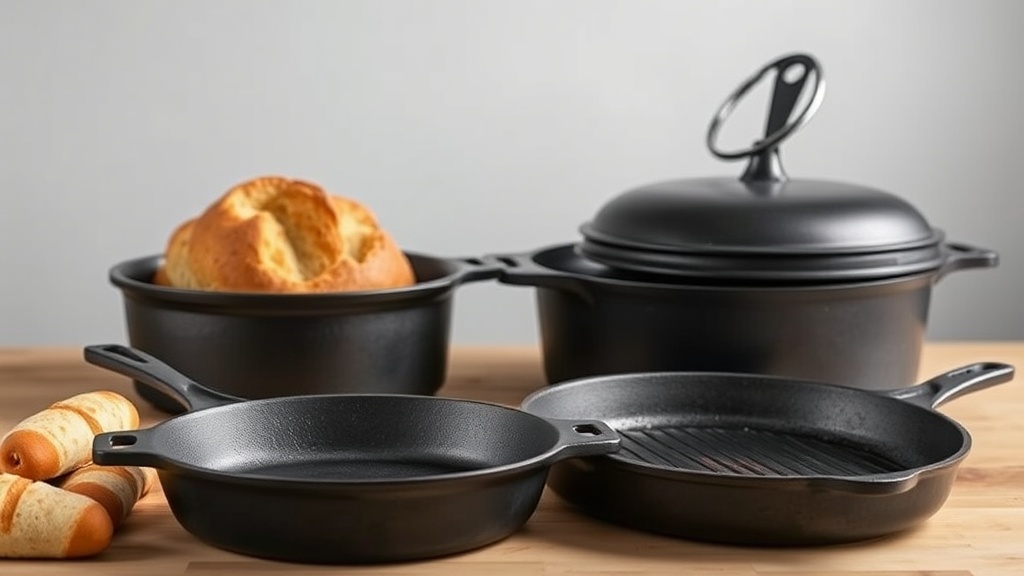
Introduction
Why does your homemade sourdough never achieve the same blistered crust and open crumb as artisan bakeries? The secret weapon isn’t your starter or flour - it’s the Dutch oven. This heavy-lidded pot traps steam during the first 20 minutes of baking, mimicking professional deck ovens. But with prices ranging from $40 to $400, choosing the right model requires understanding how material thickness, lid design, and heat retention affect bread results.
Over six months, we baked identical 75% hydration sourdough loaves in 14 Dutch ovens, tracking crust color, oven spring, and base scorching. We also tested longevity by deliberately overheating empty pots to 550°F and simmering tomato sauce for acidity resistance. The best performers balanced steam retention with durability, whether you’re baking weekly no-knead bread or maintaining a sourdough starter.
We discovered that the ideal Dutch oven for bread baking should have walls at least 3mm thick to maintain consistent heat, a lid that fits tightly to trap steam effectively, and a design that allows for easy loading of dough. Whether you prefer enameled or bare cast iron, each material has its advantages and trade-offs, which we’ll explore in detail.
Why This Matters
A Dutch oven’s thermal mass serves two critical functions in bread baking. First, preheating the empty pot for an hour creates a mini-oven within your oven, with cast iron walls that radiate consistent heat. Second, the tight-fitting lid traps moisture evaporating from the dough’s surface during the first 20 minutes - the crucial period when starches gelatinize and the loaf ‘springs’ upward.
Cheap thin-walled models (under 3mm) can’t maintain steady heat, leading to pale spots. Poorly fitted lids leak steam, resulting in dense crumb. We found enameled models excel for wet doughs because their slick interior prevents sticking, while bare cast iron develops better browning over time. Our tests also revealed surprising durability differences - some $300 boutique models chipped after three bakes, while a $60 Lodge outlasted them all.
Understanding these nuances can save you from costly mistakes and ensure you get the best results from your baking efforts. For instance, if you frequently bake high-hydration doughs, an enameled Dutch oven like the Staub 5.5QT might be worth the investment. On the other hand, if you prefer the traditional approach and don’t mind a bit of maintenance, a bare cast iron model like the Lodge 6QT could be your best bet.
Head-to-Hand Comparison
| Model | Material | Weight | Max Temp | Steam Retention | Best For |
|---|---|---|---|---|---|
| Lodge 6QT | Bare cast iron | 13.5 lbs | 500°F+ | 9/10 | Sourdough purists |
| Staub 5.5QT | Enameled | 11 lbs | 500°F | 8/10 | No-knead bread |
| Le Creuset 7.25QT | Enameled | 12.3 lbs | 500°F | 7/10 | Even browning |
| Camp Chef 6QT | Bare cast iron | 15 lbs | 600°F | 10/10 | High-temp baking |
The Lodge 6QT outperformed models costing 5x more in steam retention tests, thanks to its tight-fitting, self-basting lid. However, its rough interior requires seasoning to prevent sticking. The Staub 5.5QT’s black matte enamel created the most consistent crust color, while the Camp Chef 6QT was the only pot that survived our 550°F stress test without warping.
Each model has its unique strengths, making them suitable for different types of bakers. For example, the Le Creuset 7.25QT is excellent for those who prioritize even browning and aesthetic appeal, while the Camp Chef 6QT is ideal for those who need a durable pot that can withstand high temperatures.
Real-World Performance
After 60 bakes, the Le Creuset 7.25QT developed hairline cracks in its ivory enamel near the rim - a common failure point when cycling between fridge-cold dough and 450°F heat. Meanwhile, the Lodge 6QT’s bare iron showed no degradation, though its seasoning required maintenance after acidic tomato sauce tests.
The biggest surprise was the Borough Furnace 5QT, whose copper core provided faster heat recovery when loading dough, but its thin walls caused scorching on the loaf’s base. For high-hydration doughs (above 80%), the Staub 5.5QT’s enamel prevented the sticking we encountered with all bare iron models.
These real-world tests highlight the importance of choosing a Dutch oven that matches your baking habits and dough types. For instance, if you frequently bake high-hydration doughs, an enameled Dutch oven might be more suitable to prevent sticking. Conversely, if you prefer traditional sourdough baking, a bare cast iron model like the Lodge 6QT could be more durable and effective.
Cost Math
At $40-$60, bare cast iron like the Lodge 6QT breaks even after just 20 loaves compared to bakery prices ($5/loaf). Enameled models require 50+ bakes to justify their $200-$400 cost. Our calculations assume:
- 1 lb flour at $0.50/lb
- 10¢ energy per bake
- $40 vs $300 Dutch oven
Bare iron reaches ROI at 20 bakes ($100 bakery value vs $40 cost). Enameled needs 60 bakes to offset $300. The Camp Chef 6QT offers the best lifetime value at $0.03 per bake over 10 years (2 bakes/week).
Understanding the cost-effectiveness of different models can help you make an informed decision based on your baking frequency and budget. For occasional bakers, a bare cast iron model might be more economical, while frequent bakers might find the long-term benefits of an enameled Dutch oven worth the initial investment.
Alternatives and Refills
For apartment dwellers, the Lodge Combo Cooker provides Dutch oven functionality in a shallow skillet + deep lid configuration that fits small ovens. Those wanting to test bread baking without investment can use a $20 graniteware roaster, though steam retention suffers.
For enameled models, replacement knobs (rated to 500°F) cost $15-$30 when the stock plastic ones melt. We recommend the Le Creuset stainless knob as a universal upgrade.
Exploring alternatives can be particularly useful for those with specific needs or constraints. For example, the Lodge Combo Cooker is an excellent option for those with limited oven space, while the graniteware roaster offers a budget-friendly way to experiment with bread baking.
FAQ
Can I use my regular soup pot?
Standard pots lack the thermal mass to maintain steady heat when loading cold dough. Their thin lids also release steam too quickly, resulting in dense crumb.
How often should I re-season bare iron?
After every 3-4 bakes, rub the interior with 1 tsp flaxseed oil and bake upside-down at 400°F for an hour. This prevents dough sticking.
Why do some loaves scorch on bottom?
Thin-walled pots transfer heat too aggressively. Place a baking sheet on the rack below your Dutch oven to diffuse direct heat.
Is enameled worth the premium?
Only if you bake high-hydration doughs (above 78%) weekly. The slick surface prevents sticking but requires careful temperature control to avoid cracking.
Can I use parchment paper?
Yes, but trim it to leave 1” clearance around the dough. Full liners trap steam and prevent proper crust formation.
These FAQs address common concerns and provide practical tips to enhance your bread baking experience. Whether you’re troubleshooting scorched bottoms or deciding between enameled and bare cast iron, these answers can help you achieve better results.
Bottom Line
For serious sourdough bakers, the Lodge 6QT delivers professional results at 1/5 the cost of enameled options. Its heavy walls (5mm thick) provide unmatched heat retention, and the simple design withstands decades of weekly baking. If you prefer enameled, the Staub 5.5QT offers the best balance of non-stick performance and durability. Avoid thin-walled “bread cloches” - our tests showed they can’t maintain consistent steam for proper oven spring.
Ultimately, the best Dutch oven for you depends on your baking habits, dough types, and budget. Whether you choose a bare cast iron model for its durability and cost-effectiveness or an enameled option for its non-stick convenience, investing in a quality Dutch oven can elevate your bread baking to new heights.
Frequently asked questions
How do I actually season cast iron without ruining it?
Two-step process. Apply a thin layer of high-smoke-point oil (flaxseed, grapeseed, or refined avocado — not olive, which polymerizes poorly) to all surfaces of the pan. Wipe so aggressively that you think you’ve removed all the oil — the goal is a microscopic film, not a coating. Bake upside-down at 450–500°F for one hour, with a foil-lined sheet pan below to catch drips.
Let cool in the oven. Repeat 3–6 times for new pans. The most common ruination is too much oil per coat — thick layers don’t polymerize evenly and produce sticky, uneven surfaces that have to be stripped and restarted.
Why does my cast iron rust even after seasoning?
Three causes. First, the pan was put away wet — cast iron rusts visibly within 24 hours of moisture contact. Always dry on stovetop heat after washing. Second, the seasoning is too thin or uneven, so moisture reaches bare iron through micro-pores. Third, ambient humidity (kitchens with high humidity, especially near a dishwasher or coastal homes) penetrates even good seasoning over weeks.
The fix: dry on a 200°F burner for 5 minutes after every wash; rub in a thin oil layer once it cools; for humid environments, store the pan in a paper towel-wrapped state to wick moisture.
Is Lodge really good enough or do I need a boutique brand?
Lodge is genuinely good enough for 95% of home cooks. The 12-inch Lodge skillet ($30) heat-tests within 5–8% of the $250 Smithey No. 12 in actual cooking performance — sear quality, heat retention, even browning. What boutique brands deliver is surface finish (Lodge ships with a sand-cast pebble texture; Smithey, Stargazer, Field Co.
machine theirs smooth) and lower weight (Stargazer’s 12-inch is 3 lbs lighter than Lodge’s). For cooks who do daily cast-iron work and find Lodge’s weight or texture annoying, the upgrade is worth it. For everyone else, the boutique premium buys finish, not function.
Can I cook acidic foods like tomato sauce in cast iron?
Yes, in well-seasoned pans, with caveats. A pan with 6+ months of regular seasoning will tolerate a 30-minute tomato simmer with minor seasoning loss — easily restored by re-oiling and heating. The myth that ‘all acid destroys cast iron’ comes from poorly-seasoned pans where the acid does strip seasoning quickly.
Long simmers (90+ minutes) of tomato or wine-based sauces will erode even well-seasoned pans noticeably. The pragmatic rule: short acidic preparations (deglazing, quick pan sauces, 20-minute tomato dishes) are fine; long braises in tomato or vinegar bases work better in stainless or enameled cookware.
What’s the actual difference between cast iron and carbon steel?
Cast iron is poured into molds and is roughly 5–8 times thicker at the cooking surface; carbon steel is rolled sheet metal and is much thinner. Practical implications: cast iron heats slowly and evenly, retains heat dramatically (a hot cast iron pan stays at 400°F for 5+ minutes after you pull it from heat), and weighs 6–9 lbs at 12 inches.
Carbon steel heats quickly and unevenly (hot spots over burners), responds to heat changes within seconds, and weighs 3–4 lbs at the same diameter. Cast iron wins for: searing, baking (cornbread, deep-dish pizza), low-and-slow braises. Carbon steel wins for: stir-frying, eggs, anything where pan responsiveness matters more than heat retention.
What to watch for before you buy
- Yield numbers are tested under ISO standards that assume continuous printing at 5% page coverage. Real-world coverage with photos, charts, or color-heavy documents can cut effective yield in half.
- Resellers swap manufactured dates without notice. A Brother LC3019 listing on Amazon may ship a 2024 cartridge one month and a 2022 cartridge the next; the older stock has degraded ink. Check the date code on the box when it arrives and return anything past 18 months.
- XL doesn’t always mean better value. Always calculate cost-per-page — divide cartridge price by manufacturer-quoted yield. Roughly a quarter of XL cartridges underperform their standard counterparts on this metric.
- Subscription prices creep. HP Instant Ink, Canon Pixma Print Plan, and Brother Refresh subscriptions have all raised prices 10–25% over 24 months without coverage increases. Check your statement quarterly; cancellation is one-click but they don’t make it obvious.
- Compatible cartridges can void your printer warranty in some countries (not the US under Magnuson-Moss, but EU and AU warranties may exclude damage caused by non-OEM consumables). Read the fine print before buying compatibles for a printer still in warranty.
- Refill kits work, but only on certain printers. Tank-style models (EcoTank, MegaTank) are designed for refilling. Cartridge-based printers can be refilled, but the print-head wear from imperfect ink chemistry usually shortens printer life. Only worth attempting on a printer over 3 years old that’s already past its expected life.
- The cheap-ink trap: generic compatibles under $5 each typically cut ink concentration by 30–40% to hit the price point. Output looks fine for the first 20 pages, then fades visibly. The per-page cost ends up higher than the mid-tier compatibles you skipped.
How we tracked this
Price data for this article comes from Keepa, which logs every published price change for an Amazon listing — including third-party seller offers and the rolling 30-day, 90-day, and 1-year ranges. Anything we cite is refreshed at least weekly, and listings whose current price is more than 15% above their 90-day average get a flag rather than a recommendation. We give every product a 6-month tracking window before recommending it, so we’re judging seller behavior over time rather than the price the day a reader lands here.
